ISO 9001 · 14001 · 45001 certified · EGPC-registered
INTEGRITYBARRIER REPAIR

Bismuth-alloy barriers

A gas-tight, metal-to-metal seal formed in minutes, set on wireline or coiled tubing.
Seal
Gas-tight, metal-to-metal
Formed in
Minutes
Conveyance
Wireline or coiled tubing
Alloy SG
9.5–10.5
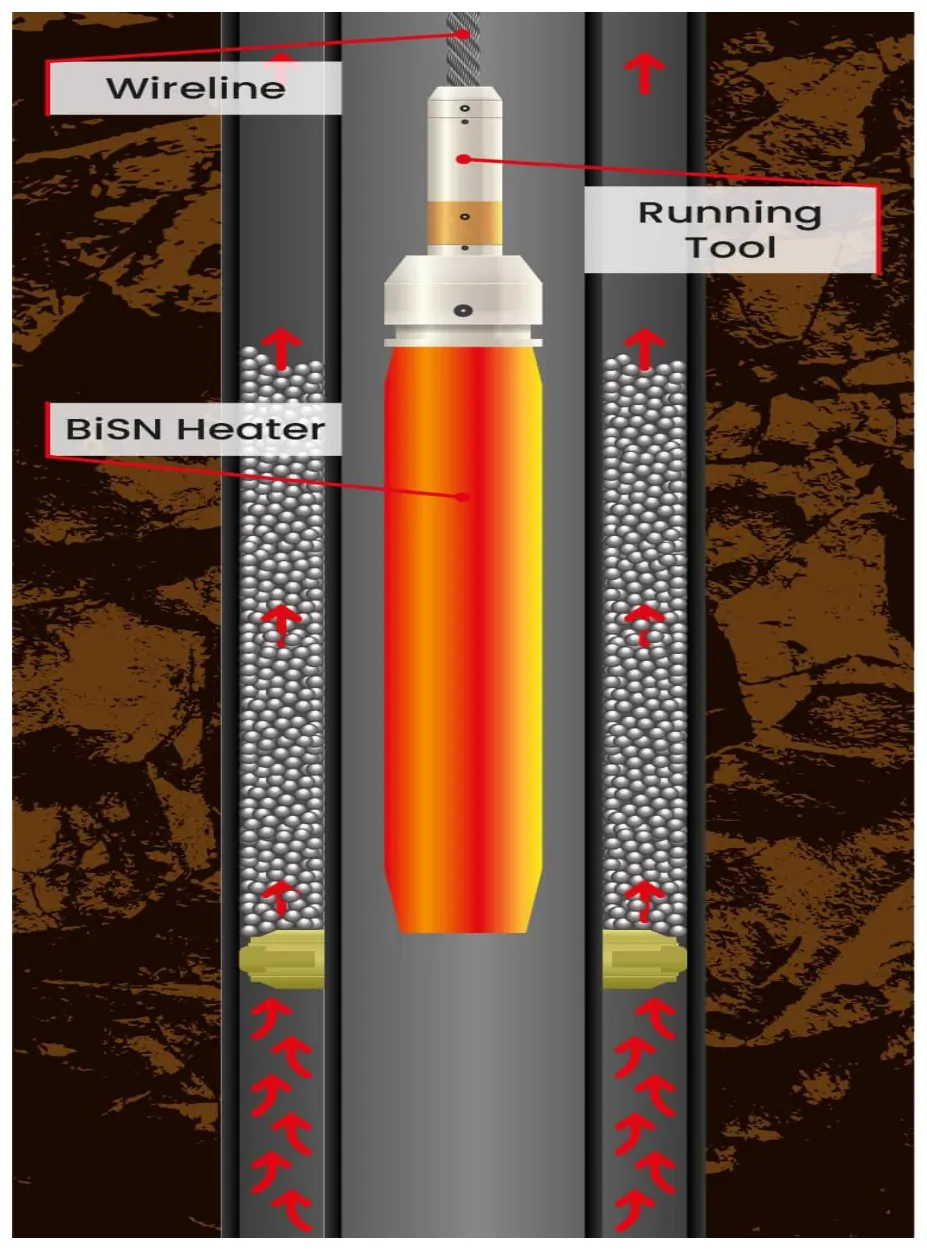
Running tool and heater on wireline inside the well, with the bismuth alloy beads around the heater
Running tool and heater on wireline

APPLICATIONS

Where it is applied

  • Sustained annulus pressureA gas-tight seal placed at the leak path
  • Tubing and casing leaksSealed without pulling the completion
  • Plug and abandonmentPermanent barriers
  • Water shut-offZones isolated
  • Cement repairMicro-annuli sealed
  • Rigless workPlaced on wireline or coiled tubing

THE QUESTION IT ANSWERS

A barrier is failing. Can it be sealed without a workover?

Over time, cement plugs and mechanical barriers can degrade, leading to sustained casing pressure, gas migration and annular leaks. A bismuth-based alloy forms a gas-tight, metal-to-metal barrier within minutes, ensuring well integrity even in poor downhole conditions.

Applications

  • Well plug and abandonment
  • Sustained casing pressure (SCP)
  • Water and gas shut-off (zonal isolation)
  • A barrier above the production packer if it fails
  • Repair of damaged casing or tubing

HOW IT WORKS

Melt, expand, seal

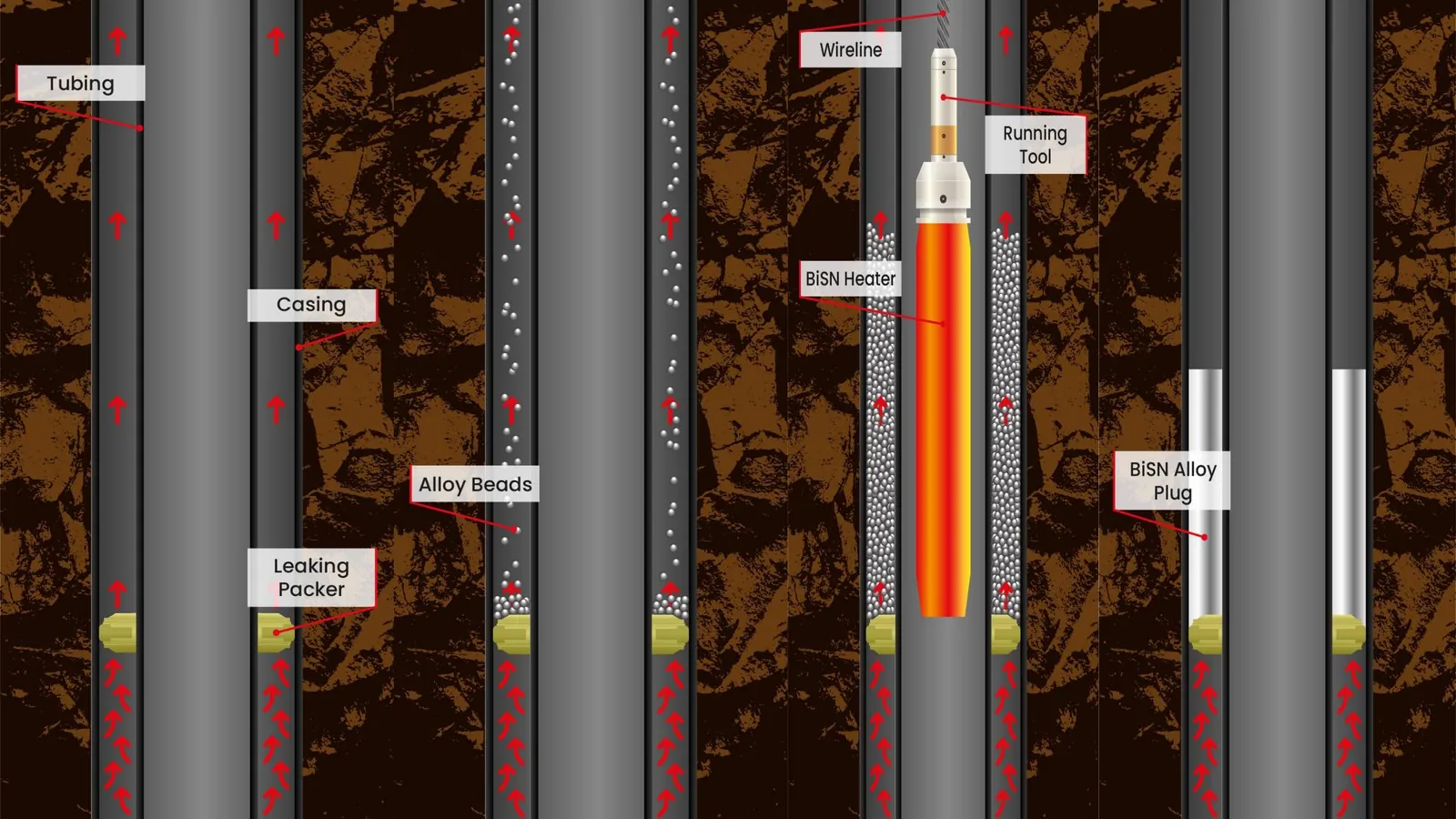
  1. 1Run. The assembled tool is lowered into the well on wireline, or coiled tubing for complex wells, and positioned at the target sealing zone.
  2. 2Heat. The thermite heater is activated and generates the heat required to melt the alloy.
  3. 3Seal. Once in place, the molten alloy cools and solidifies to form a permanent seal.
Repair above a leaking packer: alloy beads, heater on the running tool, and the finished alloy plug in tubing and casing
Repair above a leaking packer: alloy beads, heater on the running tool, and the finished alloy plug

MAIN PILLARS

An alloy that melts, expands and seals

LOW VISCOSITY

Free-flowing

It fills tight spaces in the wellbore.

HIGH SG (9.5–10.5)

Dense

Contributes to a solid, impermeable seal.

EXPANDS LIKE ICE

Ideal for tight seals

Suits tight, pressure-resistant seals.

THERMITE

The heat source

A mixture of metal powder, often aluminium, and metal oxide reacts and generates a lot of heat. It is used instead of an electric heater, which would need more power.

REPORTED CASE · ALASKA

Production packer repair without a workover

A supermajor operator in Alaska. A third-party case, as reported in the Streamlines Technology Library (2026).

SCOPE

A leaking production packer in the A annulus between 3.5 in tubing and 7 in casing. The operator wanted to repair the packer without a significant workover.

DELIVERED

The operator applied the bismuth-based alloy: an annular packer set in the 3.5 in × 7 in A annulus, then pressure-tested.

  • Packer repaired without an expensive workover
  • Bismuth-alloy packer pressure-tested
  • Significant cost savings for the operator

WHERE IT FITS

Detect, decide, seal, prove

  1. DETECTAnnulus pressure trends, noise and temperature logs locate the leak
  2. DECIDEContinue, repair by patch or alloy seal, workover, or shut in
  3. SEALA bismuth-alloy barrier on wireline or coiled tubing
  4. PROVEPressure-test the barrier and record it in the barrier register

Name one well and one leak path.

We reply with whether an alloy barrier fits, and what to prove before and after.

Discuss a barrier repair